Terug naar hoofdinhoud

Vom Moog zu Mozart - Florian Fricke

Source: Keyboards, nr.2, 1993, p.16-28
Author: Rainer Blome

Vom Moog zu Mozart - Florian Fricke

"Wir verstehen uns nicht als Musiker, sondern als Menschen, deren Entscheidung es war, das, was sie fühlen und was sie fühlen läßt, in Musik auszudrücken. Der Glaube an Vermittlung und Kommunikation ist unser Glaube an Musik. Die Musik, die wir machen, entsteht aus der Rückerinnerung. Wenn wir an Melodik denken, dann erinnern wir uns, wie wir als Kinder gesungen haben; absichtslos und nur zur eigenen Freude. Irgendwann haben wir aufgehört, wie die Kinder zu singen. Heute holen wir das nach.

Wir lernen, unsere Phantasie zu begreifen, wir ergreifen sie, wir leben sie. Unsere Musik und ihre Wandlung werden diesen Weg vermitteln: Das traumatische Leben, die unbewußten Räume. So hat unsere Musik zwangsläufig mehr Bezug zu der Musik der Urvölker, - aber ohne sich an sie anzulehnen.Wir begegnen dem Unbewußten mit unserem Bewußtsein, wir fallen aus der Zeit und dehnen diesen Augenblick.

Wir vermitteln eine Meditationsform in der Musik, die aus der Kultur kommt. Nicht aus der indischen und auch nicht aus irgendeinem anderen Kulturbereich. Der Name Popol Vuh sagt nicht, daß wir so denken würden, wie die Quiche-Indianer, dem Ursprung der Maya-Kultur, sondern wir bewundern an dem ‘Popol Vuh’ die Art und Weise, wie dieses uralte Buch entstanden ist: in einer Gigantischen Rück-Erinnering."

Unschwer auszumachen anhand der euphorischen, in endlosen Kiffer-Visionen entstandenen Erklärungssprache, ist dies ein Zitat aus einer Selbstbeschreibung der Gruppe Popol Vuh, die Florian Fricke 1970 in der damaligen deutschen Musikzeitschrift ‘Sounds’ veröffentlicht hat, das aber auch heute noch für das Musikverständnis von Florian Fricke gilt.

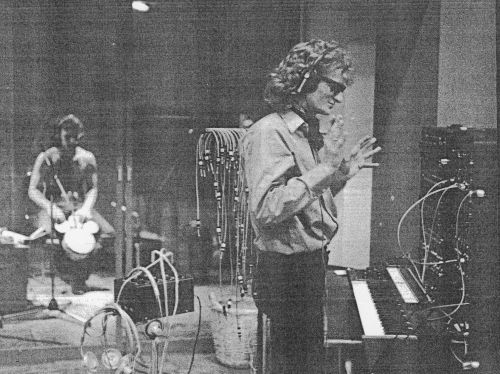
Florian Fricke, 1944 am Bodensee geboren, hatte damals gerade zusammen mit Frank Fiedler und Holger Trülzsch Popol Vuh gegründet und lebte gemeinsam mit verschiedenen anderen Künstlern in einem alten Pfarrhof im Bayerischen Peterskirchen bei Wasserburg. Dort versenkte er sich auch in die Tiefe der neuartigen Klangsmöglichkeiten, die ein Instrument bot, das damals nur in einem Dutzend Exemplaren auf der Welt existierte, und das heute als der Ur-Synthesizer gilt: der Moog, genauer gesagt: ein modulares Moog-System. (Wenn Sie einen Eindruck bekommen möchten: Das etwas jüngere modulare Moog System 55 stellte Matthias Becker in seiner KEYBOARDS-Reihe ‘Synthesizer von gestern’ in Ausgabe 3/90 vor.)

Im folgenden Interview ist nachzulesen, daß Fricke den Moog nicht seiner Elektronik wegen schätzte, sondern weil er ihm seine Vorstellungen als Komponist verwirklichen half. Florian Fricke ist - das ist auch nachzulesen - also kein elektronischer Musiker, sondern der Komponist und Klavierspieler. Schon 1972, als er die Möglichkeiten des Synthesizers erschöpft sah, hat er aufgehört, mit dem Moog zu arbeiten.

Den Musikern mit denen Fricke im Verlaufe von jetzt 22 Popol Vuh-Jahren zusammengearbeitet hat, konnte er seine Ideen und Vorstellungen immer anschaulich und eindrücklich vermitteln. Der Erklärung seiner Musik in der Öffentlichkeit jedoch ist nicht seine Sache. Er ist ein Mann im Hintergrund, der Analyse und Beschreibung seiner Musik lieber anderen überläßt. So ist denn auch der Nachholbedarf an Informationen bei Popol Vuh und Florian Fricke riesig groß.

Als erstem Musikmagazin ist es KEYBOARDS nach einen Jahrzehnt Interview-Abstinenz gelungen, Fricke aus seiner Reserve zu locken und zu einem Gespräch zu bewegen.

Keyboards: Du hast Ende der 60er, Anfang der 70er Jahre angefangen, als einer der ersten hierzulande den legendären Moog-Synthesizer zu er- und bearbeiten, und das zu einer Zeit, als ‘Elektronik’ auf dem Pop/Rock-Sektor gleichbedeutend mit ‘Exotik’ war. Wie bist du da damals reingerutscht, wie hast du das als klassisch geschulter Musiker empfunden?

Florian Fricke: Ich war auf diversen Musikhochschulen in Freiburg und München, wo ich Komposition und Klavier studiert habe. In gewisser Weise hat es mich immer schon immer zum Komponieren hingezogen, und als ich dann bei Eberhard Schoener die Gelegenheit hatte, einen der ersten Moog-synthesizer in Deutschland kennenzulernen, hatte ich gleich das Gefühl, daß dies genau mein Ding ist.

Ich war so fasziniert von dem monströsen Apparat, daß ich mich daran machte, Geldgeber zu finden, die einen solchen Apparat zu meiner Verwendung kauften. Damals gab es in ganz Europa drei, höchstens vier Exemplare dieser superteuren Wundermaschine. Das was der äußere Weg zum Moog. Hinzu kam, daß dieser UR-Moog Klangwelten beinhaltete, die mich unglaublich faszinierten, weil da Klänge waren, die ich nich nie gehört hatte. Ein Komponist lebt immer mit irgendeiner Klangvorstellung, wenn er komponiert, und die Klangmöglichkeiten dieses Instruments waren damals völlig überraschend. Nicht nur, weil sie neu waren. Es gab ja vorher auch schon Elektronik, aber die wurde im Studio geschnitten und gebastelt. Und hier war jetzt ein Instrument, auf dem man richtig spielen konnte.

Keyboards: Dieser erste Moog, heute längst eine Legende, war ein riesiger, schwer handhabbarer Apparat mit unzähligen Steckverbindungen und Modulen. Was hast du für Erinnerungen an die Arbeit damit?

Florian Fricke: Ja, dieser erste Moog hatte so seine Tücken. Er war natürlich in keiner Weise so stabil wie heutige elektronische Apparate. Die Sounds waren auch nicht direkt abrufbar, wie das heute der Fall ist. Man mußte sich vielmehr immer wieder aufs Neue zu diesen Klangwelten hinbegeben, sie immer wieder neu erarbeiten. Zudem reagierte dieses Instrument auf die kleinste Stromschwankung mit Tonhöhenänderungen - das war ein Spiel wie auf Rollschuhen. Doch als ich das Instrument dann besser kannte und mit seinen Fehlern umzugehen lernte, traute ich mich sogar, damit auch einige Live-Auftritte zu bestreiten.

Keyboards: war das ein Lotteriespiel, ob es klappte oder nicht?

Florian Fricke: Nicht unbedingt ein Lotteriespiel, aber natürlich in keiner Weise so sicher, als wenn ich mich ans Klavier setzte und weiß, der Flügel läuft mir nicht davon.

Keyboards: Kommen wir jetzt zur ersten Popol-Vuh-Platte, auf der du den Moog eingesetzt hast, die 1970 entstandenene LP ‘Affenstunde’.

Florian Fricke: Die ‘Affenstunde’ war damals so überraschend neu, daß sie auch gleich ein entsprechendes Echo gefunden hat. Sie ist in einer Zeit entstanden, in der man - nach all den repetitiven Musik-Klischees wie dem Schlager in Deutschland und dem Rock und Pop in den USA - das Bedürfnis nach neuen Klängen hatte. Die ‘Affenstunde’ wurde wie in einem Live-Prozeß hergestellt, also ohne verschiedene Takes anzufertigen, die dann einander zugeordnet wurden. Es wurde alles in einem Zug gespielt und aufgenommen. Neu war die Klangwelt, die den Hörer in einem anderen Raum versetzte, als das die bisherige Musik volbringen konnte. Die Platte wurde zwar kein Welterfolg aber sie hat eine ganz bestimmte Gruppe von Menschen in der ganzen Welt außerordentlich angesprochen.

Allein der Titel ‘ Affenstunde’ war schon exotisch, weil man assoziieren mußte, was damit gemeint war: die Erhebung des Menschen vom Tier und die Frage nach dem Wodurch. Nämlich durch des Menschen Fähigkeit, von sich selbst zu wissen und Fantasie zu entwickeln.

Keyboards: "Affenstunde" ist aber auch in eine Zeit rausgekommen, in der die damals aufrührerische Jugend ihrem neuen Lebensgefühl durch eine ganz bestimmte Musik Ausdruck verlieh. Hast du dich auch als Teil dieser Begegnung gesehen?

Florian Fricke: Ja, selbstverständlich. Wir haben voll und ganz in der Zeit gelebt. Ich habe das auch als Beitrag zu diesem Aufbruch verstanden, der damals weltweit stattfand: Dinge neu anzuschauen, Dinge neu zu verstehen - und dazu kann Musik sehr beitragen, da sie ein Stück Lebensinhalt junger Leute ausmacht. Das war damals nicht anders als heute.

Keyboards: Hast du die Popol-Vuh-Musik als politische Musik verstanden?

Florian Fricke: Nein überhaupt nicht. Höchstens insofern, als jegliche Kultur politisch ist. Denn wenn man das Denken des Menschen verändert, macht man Politik, denn das hat immer Konsequenzen.

Keyboards: ein Jahr später kam dann die nächste LP ‘In den Gärten des Pharao’. Gab es da schon Unterschiede in der Arbeitsweise im Vergleich zur ersten?

Florian Fricke: Die Beschäftigung mit der ‘Affenstunde’ hat einen bestimmten Teil der Möglichkeiten des Moog hervorgebracht. Aber da gab es noch einen anderen Teil, der noch nicht getan war. Ich kannte gewisse Klänge, die ich in meiner Vorstellung schon hattte, noch nicht. Beim ‘Pharao’ habe ich die menschliche Stimme gesucht und ausgelotet. So ist der ‘Pharao’ anders als ‘Affenstunde’ ein sehr lyrisches, gesanglich-elektronisches Stück geworden, mit modernen Chorälen und der Imitation einer Sopranstimme. Danach war dann allerdings das, was ich nur von diesem instrument ersehnt hatte, in mir befriedigt und auch erschöpft, und ich habe aufgehört, auf dem Moog zu spielen. Klaus Schulze hat ihn dann von mir übernommen.

Keyboards: Damals, Anfang der 70er Jahre, als du eure ersten beiden Platten machtest, gab es in der neuen deutschen Rockszene auffällig viele Gruppen, die eine ganz spezielle Art von Electronic Rock machten, von denen drei als so etwas wie die Pioniere dieses Genres gelten, deren Einfluß noch heute wirkt. Neben Popol Vuh waren das Tangerine Dream und Kraftwerk. Wie würdest du euch und die beiden anderen stilistisch einordnen?

Florian Fricke: Die Elektronik, die Kraftwerk machte, war die Antwort auf den Maschinen-menschen, und die Musik, die Tangerine Dream machte, war mehr psychedelisch betont, in einer modernen Nachfolge von den frühen Pink Floyd. Die Musik von Kraftwerk war damals überraschend neu und für mich anfangs nicht so ohne weiteres verständlich, weil sie so sehr maschinenbetont war. Sie war die direkte Reflexion auf das, was in bezug auf technischen Fortschritt um uns herum passierte, daß der Mensch am Arbeitsplatz mehr und mehr durch Roboter verdrängt wurde, was ja zu der Zeit gerade begann. Wir als Popol Vuh dagegen haben versucht, den Synthesizer nicht als bloßen Re-Produzenten von Technik zu sehen und Musik zu machen, in der Atmosphäre und Lyrik von Bedeutung waren. Der Moog hatte ja die große Möglichkeit, durch eine Vielfalt von Filterbänken den glatten und vielleicht auch unmenschlichen Klang zu verfeinern und in schwingendere Klangbereiche zu bringen. Die großen Filterbänke ermöglichten, nicht nur den Klang von Instrumenten wie Oboen oder Geigen nachzumachen, sondern diesen Klängen einen "human touch" zu geben.

Keyboards: Das Moog Modularsystem hatte auch ein Sequenzer-Modul...

Florian Fricke: Das wurde normalerweise dazu benutzt, um feste Rhythmen oder feste Baßabfolgen einzustellen. Ich habe es damals aber so genutzt, daß ich damit den melodischen Ton, den ich gefiltert über den Apparat am Keyboards spielte, noch einmal in eine andere Schwingungskurve brachte, indem ich den Ton über den Sequenzer laufen ließ und die Skala der Bewegung immer unmerklich etwas verändert habe, so daß kein wirklich gerader Ton entstand. Der elektronische [Sinus-]Ton hat keine Obertöne, die einem Ton doch erst die Seele geben. Trotzdem konnte man Obertöne herstellen, wie ich herausfand, indem man zum Grundton leise schwingend die Obertonreihe auf die Tastatur verteille. Und in dem Maße, in dem man den konkreten Ton angeschlagen hat, schwangen dann Terzen, Quarten, Quinten oder Oktaven leise mit. Auf diese Weise entstand ein menschlicher elektronischer Klang. Allgemein war die Arbeit mit dem Moog deshalb so schwierig, weil er völlig überraschend bei bestimmten Situationen ein regelrechtes Eigenleben entwickelte. Wenn ich zum Beispiel während der Arbeit ans Telefon gerufen wurde, mußte ich erleben, daß dieser Apparat, von mir nicht beaufsichtigt, seine eigenen Wege ging. Das hat mich teilweise sehr erschreckt. Ich habe dann auch nie in dem Raum geschlafen, in dem der Moog stand. Bei einer HiFi-Anlage ist das was anders, aber die beinahe menschliche Intelligenz dieses Apparates hat mir manchmal auch Unbehagen bereitet.

Keyboards: Später in den 70er Jahren, dann aber verstärkt in de 80ern, sind immer ausgereiftere Synthesizer und elektronische Musikinstrumente auf den Markt gekommen, die auch leichter zu spielen und zu kontrollieren waren. Hat es dich nie gereizt, weiter mit Elektronik zu arbeiten?

Florian Fricke: Nein, das hat mich überhaupt nicht gereizt. Das hatte alles nicht mehr die Möglichkeiten des Ur-Moog mit all seinen individuellen Klangvariationen. Das war immer nur der 08/15-Elektronikton. Da war klanglich nichts besonderes für mich dran.

Keyboards: Was kam dann, nachdem du dich von der Elektronik abgewandt hattest?

Florian Fricke: Nach dem beiden elektronischen Platten habe ich sofort mit herkömmlichen, akustischen Instrumenten wie Klavier, Gitarre, Oboe und Gesang die Platte ‘Hosianna Mantra’ aufgenommen. Was die musikalische Form und Gestaltung anbelangt, so gab es keinen Unterschied. Auch bei ‘Hosianna Mantra’ habe ich ein tiefes seeliches Schwingen angestrebt und verwirklicht. ‘Hosianna Mantra’ wurde so etwas wie ein Wegbereiter für die heutige New Age-Musik.

Keyboards: Diese und andere eurer Plattentitel aus den 70er Jahren - wie ‘Seligpreisung’ oder ‘Das Hohe Lied Salomons’ - brachten dir ein religiöses Image ein. Wie stehst du dazu?

Florian Fricke: Daran ist Rainer Langhans schuld, der mal in einem Interview gesagt hat, Popol Vuh würde kirchliche Musik machen. Das stimmt aber nicht. Im Gegenteil habe ich versucht, die Essenz aller Religionen in einer Note, in einem Ton zu finden. Meine Idee war es immer, zu zeigen, daß es nichts gibt außer dem inneren Funken, dem inneren Feuer, das alle Religionen verbindet.

‘Hosianna Mantra’ wurde in den Bereich von Religion gebracht - wohl auch deshalb, weil die Texte aus der Bibel stammten. Trotzdem war mir das Image nicht recht, religiöse Musik zu machen, weil ich immer nur versucht habe, Musik für den Menschen, für dessen Herz und dessen Seele zu machen. Wenn das religiös ist, dann meinetwegen, aber mit irgendwelchen kirchlicher Gebundenheiten hatte ich wirklich nie etwas im Hut.

Keyboards: Vielleicht bist du auch aus dem Grund gegen dieses religiöse Image, weil Popol Vuh von gewissen Medien gerne in die New-Age-Schublade gesteckt wird.

Florian Fricke: Ich sehe eigentlich nicht, daß das getan wird. New Age ist erst später entstanden. Das ist eine ganz andere Kiste, mit der ich überhaupt nichts zu tun habe, weil New Age vom Kompositorischen und von der ganzen Machart her meinen Intentionen konträr entgegensteht. Einfach nur andere Kulturen zu kopieren, das stand mir nie im Sinn. Ich wollte vielmehr immer nur das Innere im Menschen ansprechen. Wenn jemand meine Musik hört, kann er sich verwandeln, wieder zu seiner Seele zurückfinden.

Ich meine, es geht uns allen ja nicht immer gut. Und da hat Musik - wenn man zum Beispiel Mozart mit Hingabe gespielt hört - die große Möglichkeit, deinen Seelenzustand zu verändern. In der Musik von Popol Vuh sehe ich Sinn, in dir, zum Zuhörer, ein Gefühl zu wecken daß es dir gut geht.

Keyboards: Schon recht früh, nämlich so ab 1972, begann dann deine Zusammenarbeit, mit dem Filmemacher Werner Herzog, eine Kollaboration, die den Namen Popol Vuh auch über den Kreis der bloßen Musikkonsumenten weit hinaus bekannt machte. Von ‘Aguirre, der Zorn Gottes’ über ‘Herz aus Glas’, ‘Nosferatu’ bis ‘Fitzcarraldo’ und ‘Cobra Verde’ hast du die Musik für Herzogs Filme geliefert. Wie begann eigentlich eure Zusammenarbeit?

Florian Fricke: Das hat - wie eigentlich alles im Leben - einen ganz normalen und unmystischen Anfnag. Herzog war damals für die Synchronisation von ‘Aguirre’ in Rom und suchte eine passende Musik bei Ennio Morricone und fand sie nicht. Eine gemeinsame Bekannte machte Herzog auf mich aufmerksam. Er rief mich später in München an, und zwei Tage später war ich in Rom und habe mir den Film angesehen. Zurück in München habe ich dann eine Musik dazu angefertigt, die Werner Herzog auf Anhieb gefiel. Seitdem gibt es die Zusammenarbeit. So einfach war das.

Keyboards: Was ich aber doch für erstaunlich halte, ist die Tatsache, daß diese Zusammenarbeit, die dir sogar auch einige nicht ganz unbedeutende Filmmusik-Preise eingebracht hat, über so viele Jahre kontinuierlich anhielt und erst mit seinem letzten Film ‘Schrei aus Stein’ abegrissen ist. Gibt es eine Erklärung dafür?

Florian Fricke: Natürlich hat er immer wieder Angebote von Komponisten aus aller Welt gehabt, die Musik zu seinen Filmen zu machen. Warum er dann aber doch über einen Zeitraum von 18 Jahren an mir festgehalten hat, dafür habe ich auch eine einfache Erklärung.

Einmal eingefahrene Arbeitsweisen können den Arbeitsproze enorm erleichtern. Man muß ja bedenken, daß ein Filmregisseur wie auf einer Bombe sitzt, wenn er sich einen Soundtrack-Komponisten aussucht. Es könnte ja passieren, daß eine Musik den Film völlig umdreht oder andere psychologische Bildinhalte betont, als sie in der Intention des Regisseurs liegen. So geht also ein Regisseur einen sicheren Weg, wenn er eine bewährte Zusammenarbeit mit einem Komponisten fortsetzt. Das macht Fellini so, das hat Antonioni so gemacht, Wim Wenders macht das so, und auch Werner Herzog. Und wir werden bestimmt wieder zusammenarbeiten, weil wir uns gegenseitig sehr schätzen.

Keyboards: Filmmusik, so wird gesagt, ist immer dann am besten, wenn man sie vom Film gelöst hört, gar nicht erkennt. Wie sah konkret eure Zusammenarbeit im Einzelnen aus?

Florian Fricke: Das war sehr unterschiedlich. Das einzige, was immer gleich war, war die Terminnot. Wie viele andere Regisseure auch, kam Herzog stets kurz vor Torschluß, wenn die Kinotermine schon gebucht waren, an und sagte: "Jetzt muß ganz schnell die Filmmusik gemacht werden." So waren das sehr intensive, weil unter hohem Druck entstandene Produktionen.

Andererseits kam er aber auch gelegentlich und sagte: "Florian, mach deine Kiste auf und spiel mir vor, was du an neuer Musik hast." Das war zum beispiel bei ‘Fitzcaraldo’ so. Die Musik wurde nicht speziell für den Film gemacht, sondern war bereits auf der Platte ‘Sei still, denn ich bin’ veröffentlicht worden. Herzog fischte sie aus meiner Kiste, hob den Zeigefinger und sagte: "Diese Musik will ich haben".

Die Arbeit mit Herzog war für mich immer interessant, weil ich in ihm einen außerordentlich schöpferischen Menschen mit enormen Arbeits-Ethos kennengelernt habe, der beim Drehen immer für eine Überraschung gut war.

Keyboards: Das Überraschungsmoment scheint ja auch für deine Arbeit recht wichtig zu sein. Vor knapp zwei Jahren lernten die eingefleischten Popol Vuh-fans eine ganz andere Seite an dir kennen, als du die CD ‘Florian Fricke plays Mozart’ mit richtigen klassischen, notengetreuen Interpretationen am Klavier herausgebracht hat.

Florian Fricke: Das war natürlich nichts Neues für mich, da ich ja schon als Jugendlicher klassisches Klavier studiert habe. Nachdem ich angefangen hatte selbst zu komponieren, habe ich mich mit Klassik nicht mehr beschäftigt. Doch irgendwie ist diese Liebe für die Klassik - vor allem für Mozart - unterschwellig immer in mir gewesen, auch wenn ich sie zeitweilig beiseite gedrängt habe. In den letzten 5 jahren habe ich mehr oder weiniger als Hobby immer Klavier gespielt und mich mit Mozarts Klaviersonaten beschäftigt. Mir selbst und meiner eigenen Seele tut Mozart wohl.

Es war dann so, daß verschiedene Leute diese Beschäftigung mit Mozart mitgekriegt haben und mich ermutigten, eine Platte mit Einspielungen der Mozartschen Klavier-Sonaten voranzutreiben. Dem habe ich mich mit großer Freude gestellt.

Ich habe diese CD als Mozartverehrer eingespielt, mit meinem eigenen Geschmack interpretiert, und ich möchte behaupten, daß sie auch ausgesprochenen Mozart-kenner aufhörchen läßt.

Keyboards: Möchtest du dich mit dieser CD als moderner Klassik-Interpret der Öffentlichkeit empfehlen?

Florian Fricke: Nein, durchaus nicht. Ich möchte das nicht zur Profession werden lassen. Es ist einfach nur eine weitere Facette meines Anspruchs an Musik. Ich kann auch nicht ganz von der hand weisen, daß meine Beschäftigungen im Pop-Bereich, oder dem, was man so nennte, mit der Ausrichtung auf Rhythmus, auf Swing, auf Groove, durchaus auch einen Einfluß auf die Art hatte, wie ich Mozart interpretiert habe. Ich denke, daß ich wesentlich rhythmischer gespielt habe, als das normalerweise klassische Pianisten tun.

Keyboards: Ende ‘91 hast du die Fangemeinde wiederum überrascht, als du die CD ‘For you and me’ rausgebracht hast. Darauf sind die mit Abstand poppigsten Aufnahmen, die es von Popol Vuh je gegeben hat. Und man höre und staune - da kommt auch nach langer Abstinenz wieder Elektronik zum Vorschein.

Florian Fricke: Die Aufnahmen entstanden zwischen januar und April 1991. Und wenn man sich erinnert, war damals der Krieg im Irak, und wir an der Aufnahmen Beteiligten ware nalle sehr betroffen während der Produktion.

Und die Frage kam auf: wie kann man Betroffenheit umsetzen im etwas, was dann nicht in bloßer Niedergeschlagenheit endet, sodnern aufbauend wirkt. Wir haben dann verschiedene Elemente außereuropäischer Musik mit der typischen Popol Vuh-Musik plus Elektronik gemischt. Dahinter stand die Idee, daß die Kriege im wesentlichen dadurch entstehen, daß sich die verschiedenen Kulturen nicht verstehen, die eine Kultur nicht die Eigenheiten der anderen akzeptiert. In den USA z.B. entstand damals, ein neues Feindbild von der ganzen islamisch-arabischer Kultur. und Musik, wie jede kulturelle Tätigkeit, hat die Möglichkeit, politisch zu wirken. Voraussetzung ist, daß sich der Musikmacher als ein Mitbetroffener in dieser Welt versteht.

Keyboards: Von der Ideologie zurück zur musikalischen Praxis. Wie wurde dieser ideologischen Überbau musikalisch umgesetzt?

Florian Fricke: Ich liebe afrikanische Rhyhtmen, ich liebe den einfachen Gesang von jemanden, der die Last auf einen Berg trägt, und ich liebe die uralte, auf Atlantis hinweisende Musik der irischen Harfe. Und so habe ich bei ‘For you and me’ versucht, Innen und Außen zu verbinden, die Idee und die Struktur dieser Verbindung. In der Instrumentierung haben wir typische Momente z.B. von arabischer Tanzmusik verwendet. Wir haben ein irisches Thema mit elektronischer Musik konfrontiert, oder wir haben bei einem Stück afrikanische Elemente und Rhythmen hinzugenommen.

Keyboards: Damit meinst du wohl das Titelstück ‘For you and me’.

Florian Fricke: Genau. Der Titel allein sagt schon, daß irgend etwas Verbindliches auch für das ‘You’ enthalten ist. Was nichts anders heißt, als das man dieses Lied mitsingen kann. Das ist sicher etwas Neues an der popol Vuh-Musik: Sie ist für den Hörer singbar geworden.

Keyboards: Auf ‘For you and me’ ist Elektronik mit Akustik gemischt. Ist das die Art, wie Elektronik für dich wieder interessant geworden ist?

Florian Fricke: Zunächst mal ist nicht Elektronik im lasten Sinne hinzugekommen, sondern elektronisch gesteuerte Sample-Sounds, die wiederum von normalen, akustischen Instrumenten abstammen. Da ist also nicht die typisch elektronische Kälte. Es ist vielmehr einfach das heute übliche Arbeitsverfahren bei der Musikproduktion.

Keyboards: Bei ‘For you and me’ hast du zum ersten mal mit dem Arrangeur, Gitaristen, Keyboarder und Studiobesitzer Guido Hieronymous zusammengeareitet?

Florian Fricke: Ja, er hat wesentlichen Anteil an der Entstehung der Musik. Guido hat meine Ideen und Vorstellungen vortrefflich umgesetzt, er ist für die Balance zwischen Akustik und Elektronik verantwortlich.

Keyboards: Die beiden anderen, Daniel Fichelscher und Renate Knaup sind ja schon seit langem mit Popol Vuh verbunden.

Florian Fricke: Daniel ist als Gitarist and percussion-mann seit rund 8 Jahren dabei, und Renate war die absolute Amon Düül-Sängerin. Schon während die Amon-Düül-Zei war Renate öfter als Gast mit im Studio, sie half mir bei der Aufnahmen am Mischpult. Später dann, als es Amon Düül nicht mehr gab, bot sie sich förmlich als Sängerin für Popol Vuh an.

Keyboards: Ein Mann, nämlich Frank Fiedler ist von Anfang an mit Popol Vuh verbunden, schon damals, als ihr im alten Pfarrhof von Peterskirchen so etwas wie eine Musikkommune wart, und jetzt - bei ‘For you and me’ als Mitproduzent.

Florian Fricke: Frank Fiedler ist immer dabei nicht als Musiker, sondern als jemand der - ich möchte jetzt nicht sagen: "wie Goethe und Eckermann" - über gewisse außermusikalische Fragen, die bei der Musikproduktion oft genau so wichtig sind, mit mir reden kann und mir dann im Studio auch manchmal hilft, da er wesentlich mehr von Technik versteht als ich.
Lees meer …Vom Moog zu Mozart - Florian Fricke

Popol Vuh

Source: Your Flesh, nr.29, 1994, p.44-46
Author: Howard W.

Popol Vuh

Why you (the hep, feisty, aggro-addicted Y.F. reader) should care: Popol Vuh makes grandiose, emphatic, melodramatic, incantory spookadelica of the most potent sort and has been doing so since before most of y’all were more than a throbbing urge in your da and/or ma’s underpantaloons.
Echoes of their oeuvre can be found in the post-punk bad-mood music of folks like Laibach, Einsturzende Neubauten, Swans, et. al., and I can honestly say that these offspring haven’t outdistanced the Real Thang yet.
The recently released Best of Popol Vuh gives a brief summary of their film scoring for noted German director Werner Herzog, starting with ‘Lacrime di Re’ from 1973's Aguirre, the Wrath of God and ending with ‘We are aware of the Misery’ from 1985's Gasherbrun der Leichtende Berg. All this material is nothing short of stunning - plush, sensuous ‘pocket symphonettes’ woven from hypnotic modal guitars (think ‘Venus in Furs’) bleeding into haunted, brooding piano, devils’choirs, and thunderclap percussion punctuation. How Smile might have turned out had Charlie, not Van Dyke, been in the sandbox with Brian.
1991's For You and Me was largely disappointing; by-the-book aural wallpaper in a New Age style (which, incidentally, these guys do proudly take credit for inventing in the first place).
A new album, Sing for Song drives away the Wolves on the other hand, is a decisive return to form, vintage Vuh that blends dread and delight in that perverse yet perfect combination characteristic of this outfit.

This story begins in the late 1960s as the psychedelicized mind-set smacked into rock ‘n ‘roll with the same destructive-yet-fertilizing impact as an elephant turd hitting a patch of yojimba seeds. It yielded one of the great flowerings of truly popular/volk music norms of this century. As in LAD-induced synethasia, apparently granite-solid barriers began to blur, then dissolved between perceptual modalities, in this case rock ‘n’‘roll and other musical idioms. Rock musicians in America and Great Britain discarded their previously cherished stylistic xenopohobia and began to greedily riffle through the aesthetic glossaries of genres outside their ken for fresah ‘n’ bizarre elements of melody, riddim, texture and even basic instrumentation in their search for more penetrating and expansive means of musical expression. This led to various bastardized colloquialisms which - for better ‘r worsen - are still with us; to wit: jass-rock = fuzak, blues-rock = Thorogoodian underarchiever boogie woo, and country-rock = almost all contemporary C&W made by Nashville’s under 40-set.
Concurrently, the rockers’ interest in non-rock idioms encouraged the practitioners thereof to, in turn, try their hands at integrating their respective aesthetic canons with the R ‘n’R format: electric instruments, a big, simpleton beat, radio-friendly song lengths, etc. (Ibid., Tribute to Jack Johnson, Electric Mud, and the first Charlie Daniels Band album). The phenomenon bore real strange fruit abroad where there was no indigenous rock heritage and thus little conditioned rockist sensibility to limit imaginations, and approaches to hybridization and extrapolations thereon. Thus they tended to be more unpredictable and extreme. It got real strange in Germany.
Florian Fricke was a young, classically trained composer living in Munich at the time. After studying at the Freiburg Conservatoire, Fricke was working at writing operatic music when his dabbling with primitive synthesizers, and friendship with Munich rock musicians such as Tangerine Dream, brought him to the attention of a major label in Germany, who were looking to get into the rock business via homegrown psychedelia. This was the beginning of Popol Vuh.

Your Flesh: So, how did Popol Vuh get started?

Florian Fricke: Essentially, Popol Vuh began in 1968. I lived in Munich at the time, and was working with the first Moog synthesizer, the big machine. As rumors of my work spread through Munich, more and more musicians came to visit me. Then I began to build the group with a man named Holger and Frank Fiedler who came from the Film Academy in Berlin; this guy helped with the technical side of things.
My original idea was to compose operas, but very soon record companies got interested. One company, United Artists was happy to talk with me and I quickly had a deal. After recording the first two records with the big Moog (1970's Affenstunde and 1971's In der Garten Pharaos), I changed my musical style and did more music without electronics, pulling together an actual group with Conny Veit on vocals and Djong Yun on guitar. With this line-up, I made three of four albums that were to become the foundations of the New Age genre of music. After these, I began making music with more rhythmic emphasis. At that time, 1975, Renate Knaup Aschauer and Daniel Fichstecher joined the group. They came from Amon Düül II, who had split up. I’m still playing with these people.

Your Flesh: Was Popol Vuh part of the German psychedelic scene?

Florian Fricke: No, I wasn’t really aware of many of those groups, but I did work together with Tangerine Dream in the studio and had known members of the Munich-based Amon Düül II even before they started playing with me, who were part of the local community in that city.

Your Flesh: You hooked up with Herzog in 1972, early on in your career. How did you first meet him?

Florian Fricke: Herzog was in Rome in the studio to dub his film, Aguirre, the Wrath of God. He was looking for Ennio Morricone. He was trying to find a composer for the movie, but he didn’t find anything that really fit with his movie. Herzog was talking with a young actress over wine and pasta and she said, “The only solution is to call Florian from Popol Vuh”. He called me and the next day I flew to Rome. I talked with Herzog, watched the movie, came back to Munich the following day and wrote all the music for it in one afternoon. From that time onwards, there’s been a good working relation between us.

Your Flesh: Could you describe how you actually work with Herzog?

Florian Fricke: It’s always the same. The music is done when the movie is finished; it has to be ready very quick. I always have to work day and night in the studio tot get it done on time.
We have the same sense of intuition. Herzog will try and convey a basic, essential message that lies beneath the surface with his films, and I try to have my music flow from the depth of my soul. So that’s the reason we are friends in our art.

Your Flesh: Is there any difference in your writing for films and your other compositions?

Florian Fricke: I have done a lot of music (over a dozen albums since 1972) that has nothing to do with the soundtracks. The way I compose for each is very different. Sometimes I start just playing piano. Sometimes I sing a melody by myself without any instruments; it’s very easy sometimes - melodies fly to you like a bird, unbidden. But you are absolutely making art, creating music any way you do it. The particular inspiration is very important to my manner of composing. I’m not searching for particular music. Usually when the music does come to me spontaneously, that’s when it’s really good.

Your Flesh: Do you like to work in particular places or kinds of places?

Florian Fricke: Yes, that’s always been the case. In the early days, it was a studio in the park in Munich, Bavaria Park. The studio was huge, with very high ceilings and lots of wood. It had wonderful acoustics. Today I work in a smaller studio but with more advanced technological equipment. I work together with an excellent musician, Guido. He really knows his way around the recording studios and handles all the technological details.
It’s very important when you’re working in the studio that you can feel the spirit of the music. This is the kind of studio I work in, a special kind of studio. I’ve noticed that many young pop musicians are not in touch with that spiritual element of music; the atmosphere of a studio is not so important to them. They’ll be playing video games, watching TV. However, to me the feel of the studio is very important.

Your Flesh: Over the years, you’ve taken many trips abroad to exotic locales like Tibet, Northern Africa and so on. Was this doing musical field work in preparation for your own composing, looking for inspiration?

Florian Fricke: When I am walking through the Himalayas, I feel at home, that life is as it should be. My first journey abroad was to the Himalayas and I was seeking to learn the Throat singing technique of the Tibetans. Once I arrived, I got lucky and met a bunch op people walking through the mountains who purified rooms with their singing. I spent a lot of time travelling with them through the mountains. Since then, I’ve been teaching the throat singing technique in Germany for many years... Without making much money!

Lees meer …Popol Vuh

Krautrocksampler

Bron:  Head Heritage, 1995
Auteur: J. Cope


Krautrocksampler

foto sounds 70Die fortschrittlichste, ausgereifteste und vielleicht wichtigste deutsche Plattenproduktion will jedoch bis jetzt nich keine Plattenfirma veröffentlichen. Zu wenig expressiv, zu weit voraus, zu aleatorisch erscheint den bei Deutschlands etablierten Plattenfirmen angestellten

Lees meer …Krautrocksampler

Popol Vuh Fricked Out

Source: I/e , nr.8, 1995, p.22-24
Author: Augustin Luviano-Cordero

Popol Vuh Fricked Out

Since 1970, the german group Popol Vuh has produced constantly changing sounds that repeatedly push the boundaries of contemporary music and challenge the listener. Their latest album, Sing For Song Drives Away the Wolves, is a beautifully representative collection of this magic art. Over the years, Popol Vuh has remained on the periphery of some of the most influential movements in popular music. They pre-dated and anticipated ‘new age’ and worldbeat, but never fit any of these classifications. The non-linear path of these Florian Fricke’s career has seen him collaborate with innovative musicians such as Daniel Fichelscher, Renate Knaup and Al Gromer Khan. While these talented people have had an effect on the group’s sound, the choice of styles and instruments has always been Fricke ‘s. These have ranged from the pure synthesizermusic of the first two albums to the almost clasical piano and vocal combinations of some of the later work. Director Werner Herzog approached Fricke to do the soundtrack for the movie Aguirre, the Wrath of God. The music was so different from anything previously heard in the cinema that it became to the attention of a much wider audience. It also had a profound effect on Herzog, who commissioned from Fricke soundtrack work for The Enigma of Kaspar Hauser, Heart of Glass, Nosferatu, Fitzcaraldo and Cobra Verde. A philosopher, writer and movie director as well as musician, Fricke has consistently sought in his music a timelessness and spirituality that reflects his pilgrimages to the world’s sacred places. He feels that music has the ability to change things, to call back the soul. ‘Popol Vuh’ comes from the sacred book of the Maya, written about 1555. This common book of the Quiche Indians contains the cosmological ideas, ancient traditions and history on the origins of this ancient people. This metaphysical awareness is what Popol Vuh’s music is all about.

i/e: I am interested to know why you decided to choose Popol Vuh as the name for the group.

Florian Fricke: Back when I started in 1970, it was customary to do music with a group of people, as well as to give the group a name. At the time, The Popol Vuh played a big role in my life. I had delved very deeply into the book, and used it to find the ‘mystery keys’ to other old texts. In a way, I could read sacred books with new interpretations.

i/e: And does the name have a connection with your music?

Florian Fricke: Yes, in a way. No one really knows what Popol Vuh actually means. It translates as ‘The Book of Counsel’. But because Vuh also means something like ‘sun’, you could translate it as ‘a gathering under the sign of the sun’. That would be another way to define it, and that should reveal a few things.

i/e: How did you begin with music? How did your music career build up to Popol Vuh?

Florian Fricke: That’s a long road. Music doesn’t just suddenly start after having graduated and after wondering what one should study next, but rather when one has a strong inner feeling and inclination towards it. And with musicians, that usually comes at a very early age. With me, these inclinations, and also the certainty that I would want to spend my life doing music, began when I was 11. Only after I finished my schooling did I know exactly what I wantedto do in music. That’s when I started to do what I had already done often early on: compose, with emphasis on pieces I wanted to release. That was a long road - from when I was 11 to when I was 26, when my first LP came out.

i/e: At first you used mainly electronic instruments, but then a move was made to acoustic instruments.

Florian Fricke: Yes, back then we were the first group in the world to use the first great Moog synthesizer (now legendary) to make a new form of music. Before it was used more for electronic imitations, like Walter Carlos did in America. And we did, in a way, make a new form of music. The two Lps, Affenstunde (1970) and In den Garten Pharaos (1972) created quite a whirlwind, but then this path became a little eerie for me.

i/e: That being the reason for chanigng instruments?

Florian Fricke: Yes, that’s when I realized that I’d problably be happier if I lived my life with music that had acoustic instruments.

i/e: How is it today? Would you say that there’s an ideal combination of electronic and acoustic instruments?

Florian Fricke: Yes, due to the sampling technology. Where it is possible to store nautral sounds working with electronics in the studio is now possible, before it wasn’t. But that has really nothing to do with whether or not I value the ‘electronic’sound. I actually don’t, because it is foreign to all spiritual vibrations. It is like a person without a shadow.

i/e: How does a Popol Vuh album come together? Is every piece composed note for mote, or is there also a lot of experimentation going on?

Florian Fricke: The exact way is the imagination first: it starts with the visions of what would be the answer to time. Andthe music builds itself. In the past it started withy the instrument itself, but nowadays it comes from an inner, melodic sense.

i/e: How does your music come about? Do you compose on a piano?

Florian Fricke: It varies. For years no, then yes, then no agian. I am, thank God, independent of an instrument while composing. I can compose when I’m in the garden, planting tulp bulbs, while walking around or when I sit in a pub. It’s dificult to say where you pick up your melodies, hard to say. I don’t consciously take a theme in the sense that I’m coping other records, not in any way. But on the other hand, how do you get this or that musical phrase? Hard to say. Why is there such a thing as Anglo-Saxon pop music? How is that possible when everyone plays the same, basically?

i/e: How do you select your musicians? It seems that the group does vary from album to album.

Florian Fricke: Well, there is the ‘main core’, consisting of myself, Fichelscher, the second most important figure in the group, and Renate Knaup. These three are the main components of our group. Every now and then we have other musicians.

i/e: Does this depend on the instrumentation?

Florian Fricke: Not the core of the group, for they are people who have been touched by the spirit of this music. The instrumentation, of course, changes and that’s why other musicians are added. Sometimes it’s a choir, or a sitar player and others.

i/e: Could you tell us a little more about your last album, how it came about and what’s behind it?

Florian Fricke: Sing, for Song Drives Away the Wolves is a remix of two Lps Heart of Glass, and Eins-Jaeger, Siebenjaeger. In the past on numerous occasions record companies have put together their own compilations of Popol Vuh music and I was not asked. A little ove a year ago, I had the idea of doing a remix of pieces that would be reworked to include percussion, bass and various other instruments, so that the essence, a very important part of the Popol Vuh music, could be expressed the way I interpret it; and with that I mean the inner fire that exists in this music.

i/e: When listening more closely, it seems that several pieces appear on various albums over and over again. Are these pieces significant?

Florian Fricke: Yes, some of them have a very strong significance in my life, but I’ll just say that when I feel a piece hadn’t been produced the way it was originally meant to be, then I allow myself the liberty of picking it up again three years later and making another version of it.

i/e: You have used the same song in several albums, though. For instance, on the albums Einsjaeger, Siebenjaeger (1975), Last Days, Last Nights (1976), Nosferatu (1978), Agape, Agape (1983) and now the latest album , the same song appears with different titles. Is there a reason for doing this?

Florian Fricke: May I say the following to that: I don’t make music for collectors; I make music for the people. When I release a piece that I love very much, be it in Germany, in Italy, or in France, and the record company then changes or no longer extists, I see it as my right to use the piece and go to an American company, where none of it has been heard. I take advantage of the vagaries of the industry. And why always ‘Little Warrior’? That’s the signature piece of the guitar player. If you think back to the early opo concerts, every group had a signature piece. If one wanted to announce a pause, this piece would be played. With us, it’s the guitar player, Daniel Fichelscher, who does that. And his piece is ‘Little Warrior’.

i/e: You have worked with various record companies over the years. How come? Doesn’t a group usually stay with the same company?

Florian Fricke: Yes, that would be a dream come true for any group. However, what do you do if your radio station suddenly goes belly up, or flies to the Bahamas the next day, does a tax evasion, and never comes back? Then this company no longer exists. And I’ve outlived significantly more record companies than vice versa. I’m happy now that I’ve been able to work consistently with Milan Records for five years. But before, there were various companies, including United Artists, that were suddenly gone, liquidated, or just non-existent. And what can you do? The tax department confiscated some of the originals, and for that I had to get a lawyer. It’s kind of like the first steamboats; your Lps go under and then end up as wreckage somewhere on some shore, and if you love them, you try to get them any way you can.

i/e: How do you find titles for your pieces? Are they out or the Bible or some type of religion?

Florian Fricke: Yes, in the past, some of the titles were. But otherwise, I don’t know. It’s inspiration. It’s like when someone has achieved something it’s inside them, just as a pregnant woman doesn’t constantly check to see if the child’s coming. At the right time, a title will fall into place. Maybe years later, you’ll find it to be extremely unfitting, but still, that ‘s how it works.

i/e: You’ve remastered your Lps and Cds now. Did that go smoothly or did you come across any technical difficulties?

Florian Fricke: It actually went really well. It was definitely time that the old tapes got digitally dubbed, because tapes don’t hold their sound all that long, and they were over 20 years old.

i/e: In your music one can hear many foreign styles. It is also very remarkable how the music has unfolded spiritually over the years. Are there any traditions, cultures, ofartists, that have been of particular influence?

Florian Fricke: Without question. The encountering of other cultures happened simply during my travels. And travelling itself is also very important in my life. I’d say I value the musicof different cultures, but not necessarily the religious and political thinking of their nations. I love Arabic music above all and I love the simple, honest, humane music of people from cultures that live with the basics - day by day, under God’s sky. For example, people who live in mountains anywhere always have a very good, sincere, honest type of music that’s based on the number four. It contains endless numerical mysteries. I see a great goal in communication between one another and the idea of how to be human in our materialistic world, with just the basics. How can one live one’s life in the simplest way? That’s what I learn from people who live in the mountains of Africa of Nepal and perhaps that’s the reason for me trying to get a new, very dangerous world to face the simplicity of a very ancient one, to show how a person could live on this earth.

i/e: Would you say that your music has something identifiably German about it?

Florian Fricke: Big topic. We would first need to define what’s German. The problem is this: when you speak of German ‘folk’music, historically it plays a very minor role. Why? Because individual ‘art-music’developped in Germany very early and peaked with Richard Wagner and others. Thus we’re fairly different from other Saxon countries, in that we don’t have the influential strength of folk music on other forms. Instead, we have classical music in its higfhtest complexity. And I am certainly influenced by classical music. But wheter you call it German or not is up to you.

i/e: Is there a particular author or composer who has influenced you?

Florian Fricke: Yes, Gustav Mahler. I’ve loved him since childhood. Not everything, but some things in particular. And Mozart.

i/e: How did you get to know Werner Herzog?

Florian Fricke: I met him very early on in my youth, and our collaboration began with the movie Aguirre, The Wrath of God. He was looking for music in Italy, something appropriate by Ennio Morricone. Apparently the music didn’t fit too well, and he was quite frustrated. Then someone said to him, “You’ll have to ask Florian Fricke of Popol Vuh.“ He called, I watched the movie, made the music, and since then wehave worked together.

i/e: Which film for you is the best, where the film and the music worked the closest?

Florian Fricke: Fitzcaraldo. It’s special, more than Nosferatu, Cobra Verde or the others.

i/e: What kind of experiences have you had with Popol Vuh that might be considered highlights in your career?

Florian Fricke: Well, if you ask me like that, I’d only like to say that there have been personal high points with the group for everyone involved. This was the case with Hosianna Mantra and Agape, Agape. Of course, there have been things during my music carer which have made me very happy, but it is not so much the exterior things that are as exciting as when musicians can play together, no matter what style. And that’s the most important thing in the life of a musician.

i/e: What other interests do you have, other than Popol Vuh and music?

Florian Fricke: Greek philosophy, ancient texts and learning to understand what humankind is. Those are my hobbies.

i/e: Do you listen to any other groups?

Florian Fricke: No, none at all?

i/e: Could you tell me what you do between albums, other than compose new pieces?

Florian Fricke: Writing, planning films, homework, anything. One tries to maintain the level of creativity by changing one’s work. If you always do the same work, then at some point you’ll fatigue and collapse. When you go into a studio, this level remains relatively high, and you can maintain it more or less by changing your work. I love writing, and I love to think and imagine.

i/e: Do you favor any religion in particular?

Florian Fricke: Not really. I love philosophy because it allows free, provocative thinking and I don’t like religions in general because they do not allow this free thinking, with the exception of Buddhism. But I’m not a Buddhist.

i/e: Are you familiar with the works of Kahlil Gibran?

Florian Fricke: Ah, the Lebanese poet. Yes, he’s a good man.

i/e: Could there be an affinity between his texts and your music?

Florian Fricke: That is quite possible. I don’t remember now, I’ve done so much. I once did something based on Arabic texts: “Behold, the drover summons: why do I sleep?”
It was inspired by Rumi, the Persian poet, (13th century). Back then, Gibran really fascinated me.

i/e: On the album For You and Me, you have “OM Mani Padme Hum”. Can you tell me if this is a mantra, or an inspiration?

Florian Fricke: That’s one of the main phrases that crosses Asian people’s lips if’ they’re Buddhists. No matter what they do, whether they light a fire or put it out, they’ll say “OM Mani Padme Hum”. It’s a mantra, a prayer, used at everyday gestures, when one enters a room, or when one walks by a beautiful mountain. By the way, this is the most famous mantra of Asia. It’s almost like the ‘Kyrie Eleison’of the west.

i/e: Do you have your own philosophy about life and music?

Florian Fricke: I would hope so. If it reallt does take a lot to become one’s own person, then I hope that what I believe in matches identically with what I am. I hope the older I get, the more of my own thoughts I’ll have, and the less I’ll be manipulated, like one is, while growing up. The power to discern and to become free.

i/e: We see very little of you when it comes to live performances. Does it just seem that way, of is there a reason?

Florian Fricke: No, that’s quite right. Our last live coneert was four years ago. But that doesn’t mean that we might not suddenly play live again. The reason for not playing has to do with the life of the people that make up sich a group.

i/e: How does the future of Popol Vuh look? Can we look forward to a few more Cds?

Florian Fricke: Yes, we’re currently working on a new CD, and the production of a video with music based on pieces from the last few years. The film takes place in Greece, Asia and similar places. It’s about the confrontation of a very ancient world with a very modern one. We hope that this modern world will recognize itself in the mirror image of the ancient world. The current working title is Leuchtende Gärten (“Glowing Gardens”). I’m directing it with Frank Fiedler, a filmmaker who’s been a member of Popol Vuh for many. It’ll be about fifty minutes long.

i/e: You don’t do interviews often, do you?

Florian Fricke: Not for years, but more and more during the last year. Everything has its right moment. Now it’s important to address the people.

Special thanks for their assistance go to Peter Suciu from Milan Entertainment in New York, Burkhard Prael for interpreting and translation, and Brain Lunger


Lees meer …Popol Vuh Fricked Out

Popol Vuh

Source: Record Collector, nr.190, 1995-06, p.106-108
Author: Mark Prendergast

Popol Vuh

MARK PRENDERGAST TREADS CAREFULLY THROUGH THE MINEFIELD OF CD REISSUES BY THE INFLUENTIAL GERMAN BAND

Popol Vuh are certainly one of the most enigmatic recording groups ever to come out of Germany. Inextricably linked with the early 1970s space rock of Tangerine Dream and Ash Ra Tempel as well as the visionary films of director Werner Herzog, their music has always defied easy categorisation. They've issued dozens of albums featuring ethnic chanting, guitar mantras, straight electronic music, minimalist piano melodies, heavy rock, folk guitar instrumentals and ambient music. Yet anyone seeking a handle on their career has been frustrated by issues and reissues which change track listings, duplicate titles and generally confuse the issue. Thankfully, Spalax Music in Paris have tried to rectify the problem by re-releasing the entire Popol Vuh back-catalogue on compact disc.

Before we examine the reissues, let's look briefly at the origins of the group. Popol Vuh has always been the vision of Florian Fricke, a mystical musician born near beautiful Lake Constanz on the Swiss/German border in 1944. At only 15 he entered Freiburg Music School to study classical piano. Then he studied composition in Munich, before leaving at 19 to pursue his interest in film-making and film criticism. He met the young Werner Herzog, and a friendship developed which would lead to later soundtrack work. Fricke travelled widely in Arabia, Africa, India and Nepal, studying Tibetan choral music in the Eastern Himalayas.

Back in Munich, Fricke joined a jazz-rockgroup with ECM founder Manfred Eicher, before buying a large Moog synthesiser in 1969 and founding Popol Vuh. Their name derived from the holy book of the Quechua Incans and has a galaxy of possible meanings: the universe, God, light, energy, etc. Percussionist Holger Trulzsch from Amon Düül II and synthesist Frank Fiedler completed the initial line-up of the group, who made a huge impact with their debut album, "Affenstunde", in January 1971.

"Affenstunde" means 'the time of the monkey' and was rooted in Fricke's studies of South American Indian culture. Musically, it was an essential electronic album. Tapping into the elemental sounds of water and fire, it shifted from natural sound to electronic treatment without resorting to the cliche of rock instrumentation or vocals. It comprised just two lengthy tracks, the second and title cut reflecting a greater emphasis on ethnic percussion and folk elements. The album received very sympathetic media coverage in Germany.

MEDITATION

Recorded at the same time was "In Den Garten Pharaos" ('In Pharaoh's Garden'), a meditation on the Moog which built from soft atmospherics to loud conga drumming, with added bursts of electronic noise which climaxed in a trance-like coda for percussion, tinkly piano and rippling water. (On some compilations, just the coda has appeared, under the title "Schilfmeer" ['Sea Rushes'].) The album's second track, " Vuh", was recorded later with Fricke on the organ of the Baumberg church in Bavaria, his 20-minute performance overlaid with a cloud of cymbals and percussion. "In Den Garten Pharaos" was issued in April 1972. The following month Fricke contributed Moog synth to Tangerine Dream's "Zeit", a classic performance which inspired the Dream's Christoph Franke to explore the potential of the instrument.

It was the soundtrack of the film 'Aguirre, Wrath of God' in 1973 that pushed Florian into the spotlight. An angelic choir accompanied by a haunting Mellotron solo was the mighty sound that opened the movie, as the doomed Aguirre and his conquistadors made their way blindly down a Peruvian mountainside in search of El Dorado. Classically divided into theme and exposition, this theme, "Aguirre 1", began an association with director Werner Herzog that continues to this day.

The "Aguirre" album currently available on Spalax is actually a revamp of a 1984 LP on Celestial Harmonies. It includes the entire "In Den Garten Pharaos" LP plus "Spirit of Peace", a piano trilogy from 1985 - and, at last, "Aguirre 1". The real soundtrack to 'Aguirre' was released on Cosmic Music in1976, and contains two versions of "Aguirre", but it has yet to be seen on CD.

In January 1973, meanwhile, Fricke unveiled a new Popol Vuh line-up, featuring Conrad Veit (guitar) and Djong Yun (vocals) ."Hosianna Mantra" saw Fricke turn his back on electronics in favour of tranquil vocals, satin guitars and soft piano runs, while a tamboura added an Indian inflection. Tracks like "Kyrie" and "Blessing" were unambiguously Christian in their outlook, and the transparent delicacy of "Nicht Hoch Im Himmel" ('Not High In Heaven') characterised the whole project.

Everything changed again for "Seligpreisung" ('Beatitudes'), which was released in September 1973. Danny Fichelscher (ex-Amon Düül II) joined Conny Veit on electric guitars and drums, while Fricke handled vocals, with lyrics taken directly from Christian prayers. An oboe gave the album a classical feel, but it was still rockier than the group's earlier efforts.

By 1974, Popol Vuh had become a trio of Fichelscher, Djong Yun and Fricke. The resulting 'Einsjäger & Siebenjäger’ (One Soldier & Seven Soldiers) was their hardest album yet, with Fichelscher's dripping Fender solos and drums well to the fore on tracks like ''Kleiner Krieger'' (Small Wars) and the excellent "King Minos''. After some pastoral guitar and muted piano, the album reached a crescendo on the 20-minute title track, a strange hybrid of all their previous styles with Yun’s vocals providing a final, eerie edge.

After performing a walk- n part in Werner Herzog's film 'The Enigma of Kaspar Hauser', Fricke returned to Tonstudio in Munich in February 1975 to record "Das Hohelied Salomos" ('The Holy Song Of Solomon’) with the same line-up. This was vintage Vuh, with two stand-out performances in "Du Schönste Der Weiber" ('You, Most Beautiful Of Women’) and "Deine Liebe Ist Susser Als Wein" (‘Your Love ls Sweeter Than Wine’). Fichelschel’s guitar provided the creamiest sound on record since 'Meddle’-era Pink Floyd, while "Du Tranke Mich Mit Deinen Kussen" (You Drank Me with Your Kisses') displayed a fine understanding of the dynamics of volume.

For 1976's "Letzte Tags, Letzte Nachte" ('Last Days, Last Nights'), another Amon Düül musician, singer Renate Knaup, replaced Djong, who opted for a solo career. Only 30 minutes long, this was defiantly a rock album, yet the guitar solos had a strangely ancient quality, and in places, Renate's voice took on the feel of a ritualistic chant. For all its idiosyncrasies, the album is worth investigating, notably for "Last Days, Last Nights" itself, a great progressive rock number sung in English. Also issued in 1976 was the quirky if unexceptional "Yoga", which documented Fricke's total obsession with India and the East.

VISIONARY

Over the next two years, Popol Vuh hit their recorded peak, as Fricke began working again with the visionary Werner Herzog. Their first project was "Singet, Denn Der Gesang Vertreibt Die Wolfe" ('Sing, Then The Song Which Dispels The Wolf) - alias "Herz Aus Glas" or "Coeur De Verre", for this 1977 soundtrack of the film known in Britain as 'Heart Of Glass' was released under three different titles. Herzog's film about the coming of the industrial revolution was famous for his use of hypnosis on the cast. Its dreamlike quality was reflected in the strange music which Fricke and Fichelscher concocted in the studio, with grinding, oddly-accented rock instrumentals augmented by forays into primitive music and raga. One track, "Der Ruf " ('The Cry'), could almost be described as pre-punk, post-punk music!

Potential collectors should beware, however, of the CD which uses the "Singet, Denn . . ." title, as it merely contains edited versions of these tracks plus the complete "Einsjager . . ." from the band's 1975 album.

Herzog's next venture, his stylish 1978 re-make of Murnau's 1922 classic 'Nosferatu', gave Klaus Kinski his finest role as the vulnerable vampire. Once again, Florian Fricke provided the music. Unfortunately the soundtrack was released in three different versions, two in 1978, one in 1985. Spalax have thankfully issued the first two versions on CD, "On The Way To A Little Way/Nosferatu" and "Bruder Des Schattens - Sonne Des Lichts" ('Brother Of Shadow - Son of Light'). The first disc, with its excellent cover shot of Kinski and Isabelle Adjani, was a strange mixture of sitar mantra, the delightful acoustic guitar instrumental "Morning Sun", edits from "In Den Garten Pharaos" and a re_run of "King Minos" from "Einsjäger..." with added sitar! The most successful piece on the album was "On The Way", a spine-tingling, cavernous chant/drone.

Fricke obviously thought he could do better, and issued the more substantial "Bruder des Schattens" later the same year. On the title track the chant drone was extended into a gorgeous ambient/guitar/ piano/sitar mantra which lasts more than 17 minutes. On "Hore, Der Du Wagst" ('Listen, Who Dares'), Fricke again used the short sitar ideas of the first disc as a basis for more profound experiments, following Eno's lead by utilising the still ambience of decaying piano notes. "Das Schloss Des Irrturns" ('The Castle of Errors'), a cascading acoustic guitar piece, was followed by "Die Umkehr" ('The Turning Back'), an unsettling but still beautifully played electric rock piece which concluded Popol Vuh's most famous and possibly finest album.

This classic period continued with the release of 'Night of the Soul', "Die Nacht Der Seele: Tantric Songs", which was inspired by Fricke's studies of lndian tantra and his wanderings in the Himalayas. He expanded the group to a six-piece with Danny still on guitar and percussion, Al Gromer still on sitar, both Renate Knaup and Djong Yun on vocals and Susan Goetting on oboe. The record, meanwhile, began with Amazonian chants which seemed to encapsulate Fricke's mysticism. Exquisite acoustic guitar passages like "Mit Händen, Mit Füssen" ('With Hands, With Feet') and "Auf Dem Weg" ('On The Way') were squeezed between soft, chanted mantras, percussion instrumentals and two ambient piano pieces titled "Mantram Der Herzberuhrung" ('Mantra Of the Touching Of The Heart ).

Because of the record's stylistic similarity with "Bruder Des Schattens", Celestial Harmonies reissued an edit of both albums in1981, under the title "Tantric Songs". Celestial's CD reissue in 1988 coupled that compilation with the entire "Hosianna Mantra" album. In the midst of that confusion, Spalax's commitment to re-releasing the albums in their original format and artwork is commendable. Sections of "Tantric Songs" and much of the next album, "Sei Still, Wisse Ich Bin" ('Be Still And Know That I Am'), was used by Werner Herzog in his 1982 film 'Fitzcarraldo' which again starred Klaus Kinski - this time as a crazed adventurer loose in the Amazonian jungle. The "Sei Still . . ." material was definitely the most difficult Popol Vuh music to digest, and it worked best when it accompanied Kinski and his crew as he defied nature by dragging a paddle-steamer across a mountain. Most of the record consisted of raw, ritualistic sounds - heavy thumping percussion and unnerving chants.

Former Tangerine Dream member Klaus Schulze released "Sei Still", Popol Vuh's 14th official album, in 1980 via his Innovative Communication label. The year before, he had also re-released their debut, "Affenstunde', at WEA'S request!

'Agape-Agape" ('Love-Love') was the band's next new release, on the Norwegian Uniton label. A peculiar record, it seemed to summarise all of Popol Vuh's previous recordings from "Einsjager..." to "Nosferatu" and "Bruder Des Schattens". "Love-Love" sounded like vintage "Ummagumma"-era Pink Floyd, while the second side drifted from cloudy mantra into the pure ambience of "Why Do I Still Sleep", a still piano track and one of the quietest eight minutes of music ever committed to tape. If you're unfamiliar with the group, this is a great place to start, as if you like what you hear, then you'll like everything else!

With Conny Veit back on guitar, Renate Knaup still on vocals and Danny Fichelscher as ever on guitars, Fricke brought in yet another guitarist, Bernd Wippich, for "Spirit Of Peace" in 1985. Unfortunately, on the original Cicada release the music was buried in a muddy mix, leaving many reviewers unimpressed. Spalax's CD issue gleams by comparison, revealing another great Popol Vuh album. Again the atmosphere was fllmic, and the chanting of "We Know About The Need" and "Song Of The Earth" appeared on the soundtrack of the 1987 Herzog film, 'Cobra Verde'.

TRANCE INDUCING

The LP's title track, "Spirit of Peace", was a better mix of the second movement of the longer "Spirit of Peace" from the "Aguirre" compilation, as Fricke drew long, static lines out of a series of sparsely played piano notes. The finale, "Take The Tension High", was a tour de force. After a short choral opening this 17_minute wonder launched itself into a hypnotic, trance_inducing guitar/vocal mantra, a form that was enthusiastically absorbed by Rugby's Spacemen 3 in the late 1980s. That was the last album of new Popul Vuh material to date, though both "Cobra Verde"( 1987) and "Der Gesang Der Angel" ('The Song Of The Hinge!') (1988) featuring music from the 'Cobra Verde' movie. Plans are afoot to release both on Spalax, who have also issued the original 1982 soundtrack from 'Fitzcarraldo'. Meanwhile, the label has just found the tapes to the 'Aguirre' soundtrack and are planning to release it with its originaltrack listing of 'Aguirre 1", "Aguirre 2" and the epic "Vergegenwärtigung" ('Imaginings'). A film of Popol Vuh in the Sinai desert, called 'Meditations', which will feature the music from 'Fitzcarraldo' is also in the pipeline.

Two other compilations of Popol Vuh music are available on CD from other companies: "The Best From Werner Herzog Films" and "Gesang Der Gesange" ('Song Of Songs'). But nothing can match the majesty of the original catalogue. Since ambient took a hold on today's post_house imagination, the landscaped emotional soundworld of Popol Vuh has become an important reference point for isolationist musicians like Main, Thomas Koner and Orang. The CD reissues aren't a nostalgic throwback to the progressive rock era but a vibrant ingredient of today's music - and possibly the future as well. As Florian Fricke once said: ''We are working on a music which is so free that the listener can find the way to his or her own fantasies."

Lees meer …Popol Vuh